
Everyone has natural ways in which they take action. These are measured in four areas — Fact Finder, Follow Thru, Quick Start, and Implementor — called Kolbe Action Modes®.
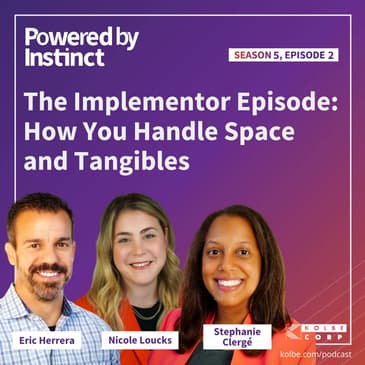
In this fourth and final episode of our Kolbe Action Mode series, Kolbe experts Stephanie Clergé, Eric Herrera, and Nicole Loucks break down the Implementor Action Mode and discuss the different strengths within it: envisioning, restoring, and demonstrating.
Our Kolbe experts will take you through what it means to have these different Implementor strengths as they address common misconceptions, break down how to work with people across the Implementor spectrum, and explain how you can maximize your Implementor strength for more productivity, better communication, and improved collaboration.
It’s time to implement your instincts as you learn more about that yellow line in your Kolbe result!
Hosts:
💡 Names: Stephanie Clergé (8363), Eric Herrera (5392), and Nicole Loucks (5824)
💡What they do:
Stephanie is Kolbe’s VP of People and Product Development.
Eric is Kolbe’s VP of Growth and Strategic Alliances.
Nicole is Kolbe’s Director of Training, as well as VP of Education and Youth Programs.
💡Company: Kolbe Corp
💡 Where to find them: Kolbe.com
https://www.linkedin.com/in/stephanieclerge/
https://www.linkedin.com/in/ericherrera5392/
https://www.linkedin.com/in/nicole-loucks-64279058/
Takeaways
The Kolbe Action Mode Implementor measures how individuals naturally take action when striving, focusing on how they handle space and tangibles.
Individuals with strengths in the Implementor Action Mode exhibit varying levels of envisioning, restoring and demonstrating, impacting their approach to handling space and tangibles.
Effective coaching and communication strategies are essential for supporting individuals with different strengths in the Implementor Action Mode, both in professional and educational settings. Embrace and leverage your natural strengths rather than conforming to arbitrary expectations.
Understanding the interdependence of different strengths is crucial for problem-solving and achieving optimal outcomes.
Key Quotes
“Individuals with a 7-10 in Implementor really solve problems by being hands on. They show, they don't tell. They're going to use quality materials and tools to build or create something tangible. So when they're solving problems, they're really going to look for those physical or tangible solutions and create them.”
“We were actually having a conversation before we started the podcast, and one of our colleagues said he used to work with someone, they called him the walking email because he would get up, walk down to your office and go have a conversation. That was how he used that energy to get out and interact.”
“When my wife says, ‘Hey, Eric, can you fix X?’, I find all kinds of excuses to put it off. I can do it and I can muddle my way through it, but it's frustrating the entire time. I would rather kind of see the vision of this is what is, this is how amazing it's going to be when it's done.”
Chapters
02:54
The Three Strengths of the Implementor Action Mode
06:00
Coaching Strategies for Demonstrators
11:59
Envisioners: Abstract Problem Solving
19:12
Restorers: Balancing Abstract and Concrete
24:48
Navigating Strengths in Diverse Environments
31:04
Debunking Misconceptions About Implementors
***
Find the freedom to be yourself by taking the Kolbe A™ Index or Kolbe Y™ Index for the youth in your life. Many successful companies work directly with a Kolbe Certified™ Consultant — find one in your area.
If you would like to be a guest on Powered by Instinct or get in touch with any of our Kolbe Experts, send us a quick email: info@kolbe.com
[00:00:00] And I know sometimes people struggle with understanding what is this Implementor mode?
[00:00:03] So the one thing I will say to people over and over and over is try to, you know, find that diversity of strings, especially in the Implementor in your life.
[00:00:30] The idea of youth and education services here at Kolbe Corp.
[00:00:33] My M.O. is 5-8-2-4.
[00:00:36] Today we have a very exciting episode where we're going to dive deep into one of the Kolbe Action modes Implementor.
[00:00:42] I can't wait for this one because it is sometimes really underrepresented in discussions, even though it's incredibly important, especially in the workplace.
[00:00:51] So first let me welcome my co-host for today, Steffy Clare J and Erika Reira.
[00:00:55] Steffy Narek spend a ton of time working with people and in organizations to help them get the most out of their instinctive strengths.
[00:01:02] So they are the perfect guests to help us break this down. Hi, guys.
[00:01:07] Hi Nicole. Hello everybody.
[00:01:10] So Steffy is M.O. is 8363 and Erika's is 5392.
[00:01:16] So that last number in both of their M.O. is we're going to talk a lot about that today.
[00:01:20] So let's start at the very beginning. Steffy can you get us an intro about what Kolbe is even measuring, and then Eric, you can kind of share about the Kolbe Action modes.
[00:01:30] Sure. So Kolbe is telling you something different than what you get from those assessments.
[00:01:35] It's not about how smart you are or your IQ, your skills or even your education.
[00:01:40] It's not about your personality. It's not about whether you're introverted or extroverted, your emotions or preferences.
[00:01:46] What your Kolbe A result does tell you or your M.O. is we like to call it your mode of operation, your natural way of solving problems, making decisions and taking action on purpose.
[00:01:58] It's really all about how you are naturally creative and how you naturally execute.
[00:02:03] Yeah, and so Steffy, you mentioned right with the Kolbe A we're measuring how you get stuff done.
[00:02:07] But we all have those four numbers. We have those four colorful bars. Those are the four ways all of us naturally take action.
[00:02:14] So we have that red one fact finder. It's all about gathering and sharing information.
[00:02:19] The blue one follow through. It's about dealing with systems and processes.
[00:02:23] The green one quick start is dealing with risk and uncertainty. And today, we're going to talk
[00:02:27] about that yellow and implementer. Just all about handling space and tangibles. And we all have those numbers from one to ten.
[00:02:34] Just always keep in mind it's not that one is better than a ten or a ten is better than a one.
[00:02:40] We're just trying to figure out on this scale where do you fall?
[00:02:43] Excellent. Thank you both. So Steffy, Eric mentioned we're going to dive deep into that last action mode implementer so that yellow line that last number in your MO
[00:02:53] Can you give us a breakdown of the three zones of operation within our implementer action mode?
[00:02:59] Sure. So the first thing that you need to know is that we're not talking about the verb to implement or to execute all of the four action modes that are just described are
[00:03:09] Tell you how you execute or how you take action instead this implementer mode is using the noun meaning to use implements or tools
[00:03:18] And so like all four of the action modes implementer is on a continuum. In this case that continuum goes from the
[00:03:25] Abstract sort of in the one to three range to the concrete in the seven to ten range of strengths and so as Eric mentioned it's all about how we deal with space and tangibles
[00:03:35] So in that seven to ten range we call this strength demonstrate or sometimes build and that's because individuals with this instinct of strength really solve problems by being hands on
[00:03:46] They show versus tell right they're going to use quality materials and tools to build or create something tangible.
[00:03:55] So when they're solving problems they're really going to look for those physical or tangible solutions and create them.
[00:04:01] They often have an act for constructing or manufacturing or dealing with things in the physical realm. So you know, there's all kinds of ways and that people take action in this mode
[00:04:12] I sometimes think about surgeons or firefighters people who use that physical energy to get things done
[00:04:18] Although we're going to keep in mind that it's not about what you do but about how you do it
[00:04:23] Then on that other end of the continuum strengths in the one to three range we call those envision so that strength is really all about
[00:04:31] having to you can describe without having to physically demonstrate
[00:04:36] Individuals with this strength kind of picture how it can work they sort of see things in their minds. I so they don't need to see it or touch it or be a person right
[00:04:44] And they're certainly not usually going to build a physical solution
[00:04:48] They deal with the things that are more abstract or intangible the things that you can't see or touch concepts like maybe finances or philosophy
[00:04:56] And so there's all kinds of ways that people naturally envision then we've got these strengths in the four to six range
[00:05:03] We call this strength restore and so these individuals have this wonderful talent of being in between those who deal with the abstract and those who deal with the tangible
[00:05:11] They might repair things without the need to really build it from scratch
[00:05:15] But kind of keep things physical items restore them back to their original function, right?
[00:05:21] Just as that name implies
[00:05:23] So keeping machinery or physical systems working
[00:05:26] They're also really great at setting up environments making tweaks to seating or lighting or layout and bringing in natural elements like plants
[00:05:34] So there's all kinds of different ways that these individuals contribute and I'm super excited to talk about all three
[00:05:41] So now I want to go through each of those strengths and talk about what are the kinds of actions?
[00:05:45] We're going to see from these people
[00:05:47] Many to these zones and think about how are we going to help coach individuals
[00:05:52] Who have each of these strengths?
[00:05:54] So let's hear about that first zone the people who are in that seven through ten range
[00:05:58] Who naturally demonstrate
[00:06:00] So Eric why don't you start how are you going to coach somebody to be successful using that string
[00:06:05] It's somewhat tied to the communication piece, right?
[00:06:08] They need to show you a thing that makes them a much more effective communicator
[00:06:13] I always think of when you go to the dentist and they have that tooth that's cut in half
[00:06:17] And they point to the enamel in the root and all the other parts of your teeth a lot of dentists are in that seven to ten range
[00:06:24] Because they're literally in your mouth working with physical implement and so anytime you're trying to communicate
[00:06:30] Bring a physical thing with you even if it's as simple as
[00:06:35] Printing a PDF rather than emailing it or something like that
[00:06:39] Another kind of tip that I would give those kinds of folks is
[00:06:43] Build things are going to stand the test of time. I know because of deadlines and budgets and all that kind of stuff
[00:06:50] Sometimes you're rushed to build something you just kind of slap it together
[00:06:53] That's actually draining your energy so do what's necessary to build a high quality result
[00:07:00] Stephanie, what can you add especially in in terms of how somebody can be successful in any work environment with this strength?
[00:07:09] Yeah, so I think paying attention to your environment is something that you're going to naturally do
[00:07:13] But sort of like what Eric alluded to where some environments are kind of more conducive to that than others
[00:07:18] I think it's all about looking at your environment and seeing what you can do
[00:07:22] So you may have this physical energy that you need to get up and work off
[00:07:26] So things like travel or working out in the field whatever that looks like in your industry or
[00:07:31] Bringing those elements to you so instead of you know doing one on ones over Zoom or even just
[00:07:38] Sitting face-to-face go take a walking one on one right or figure out a way during the day that you can take a walk
[00:07:44] That's really going to enhance your problem solving and decision making talents
[00:07:48] But Nicole what's funny about this is you are the host of this one
[00:07:53] But I actually feel like you have some of the most first hand information with input letter
[00:07:59] So I would love to hear your thoughts too. Yeah, I mean I have the great privilege of
[00:08:05] Being related to not one but two initiating implementers or individuals who naturally demonstrate
[00:08:11] One is my mom and one is my father-in-law so from a very young age even before I knew
[00:08:17] Kind of what this all meant and knew their
[00:08:20] What their strengths were from a number of perspective or from a string perspective
[00:08:25] It comes into play so my mom who's an eating implementer. So she naturally demonstrates
[00:08:30] Both you know had a career before she retired that was very physically demanding so as a nurse in a hospital
[00:08:38] She was on her feet all the time. She was physically manipulating patients
[00:08:43] She would problem solve by
[00:08:46] checking the patient physically
[00:08:48] manipulating them checking vitals
[00:08:51] dealing with machinery right all the things where she's naturally going to thrive or have this kind of neck of
[00:08:59] Feeling with those things so she put herself in a in a situation where that was not just a great thing to have
[00:09:05] But sort of a requirement to do that job really really well
[00:09:09] but even from a home perspective
[00:09:10] Her natural need for quality and this is a really interesting point when we think about implementer
[00:09:16] It's not just quality. Oh, you have a quality power point or you
[00:09:20] Made it a quality speech we're really talking about that physical quality right the materials you're using to create something
[00:09:27] So for example my mom
[00:09:29] Still to this day in this day an age cannot online shop for clothes for herself or anyone else
[00:09:36] She has to go into stores and feel it feel the fabric she will look at the materials of shirts
[00:09:43] or our dresses or you know things and look for more natural or organic sort of materials that are soft
[00:09:50] Comfortable breathable is a word. I heard a lot growing up
[00:09:53] Those types of things are very important for her to be successful. So when we talk about these and sheading implementers
[00:10:00] The materials that are used all the way from the fabric the clothes making sure you have the right knife to cut something for
[00:10:09] To make dinner or that you have the right solutions to you know
[00:10:14] Pete or how certain anything that your problem solving is just so absolutely important
[00:10:18] And anytime I've had the opportunity to show my mom something or teacher she has to physically do it
[00:10:24] I tried to explain to her how to lift my chair once a desk chair that kind of goes up and down
[00:10:31] And I was like okay, there's a handle on the right and you do that she's like oh, can I sit in it
[00:10:35] And she actually has to be doing it otherwise it just doesn't stick in the same way so it's really important when we have these
[00:10:43] Cheating implementers that were allowing them to problem solve hands on in this sort of
[00:10:50] Apprenticeship sort of way as opposed to talking at them and
[00:10:54] You know we talked a lot about some more kind of hands on professions. I mentioned dentist
[00:10:59] Stephanie said get out in the field you talk about your mom as a nurse
[00:11:02] But if you work in an office and you're a 7 through 10 an implements are you still have that energy it needs to be you
[00:11:09] Right, so get up walk around the office
[00:11:12] We were actually having a conversation before we started the podcast and one of our colleagues said he used to work with someone
[00:11:18] They called him the walking email because he would get up walk down to your office and go have a conversation
[00:11:23] That was how we use that energy to get out interact with folks. So yeah, you can have any of these strengths and have any job
[00:11:31] You said to figure out how to use it and kind of
[00:11:33] Lean into that talent in the in the situation you're in
[00:11:37] Well in Eric I think it's worth adding there are some people in these industries that wouldn't necessarily always lend them
[00:11:44] Soaks to that and so in addition to having your own
[00:11:47] Connobles sometimes it's also finding what's the right niche within that industry
[00:11:51] So I remember consulting with someone who was in financial services actually in insurance
[00:11:56] And the type of insurance that he did was ensuring physical things like people's yachts and people's houses and you know
[00:12:04] Really high and physical products and so that was a really great fit for that person Amy Brisky
[00:12:10] Well sometimes talk about her husband as a realtor and the way that he is gonna show a house
[00:12:15] He's gonna feel in touch and show the materials versus someone else on the other end of that continuum
[00:12:20] Might just talk about how are the schools in the neighborhood and give you lots of abstract concepts about how your children
[00:12:26] Might grow up in those kinds of things. He's going to really show and and demonstrate and and
[00:12:34] Describe those materials in a very hands-on way and one of the things we see a lot with our clients who tend to have this strength and
[00:12:41] Implementar especially in
[00:12:43] Organizations where it might not be an
[00:12:46] obvious
[00:12:46] Sort of industry is they're able to deal with
[00:12:50] The space of the office in such an interesting and an important way that others might not consider
[00:12:59] Functionality and just the feeling of the space and
[00:13:02] making it really usable and
[00:13:06] You know what is the the on-beons if you will of kind of walking into that office and
[00:13:11] What how are things sort of that I always talk about my mom being kind of this like expert
[00:13:16] Person who can move things around and everything just sort of fits in the right spot
[00:13:21] That's really interesting, but there's this sense of the whole atmosphere of the whole environment
[00:13:25] That is considered I feel like when you have this strength that has such an important sort of gift
[00:13:31] That people would lose out on or you know organizations would lose out on if they didn't have somebody with that strength to really
[00:13:37] You know make that important or make that a priority
[00:13:41] Well, and not just the gift but in the contribution, but also the need
[00:13:45] So sometimes they're not going to get started until that environment is right and you start to see that even in the four to six range
[00:13:52] So maybe so we'll we'll talk about that in a little bit. Well, you mentioned Stephanie kind of like a little bit
[00:13:59] You don't get started. So where might these people either be triggered these people with this strength to demonstrate or
[00:14:06] Or sort of procrastinate and not able to get started? You kind of started it. Let's is there anything else you want to add?
[00:14:12] Well, I think what's interesting is what comes with quality and durability especially if you're manufacturing
[00:14:18] Physical products or building something with your hands is sometimes that means it thinks take quite a while
[00:14:24] Right like the difference between something that sort of slapped together versus something that is
[00:14:29] Created for the the long term
[00:14:31] So we think
[00:14:32] Figuring out how you can communicate the time that you need right in order to do things well
[00:14:40] But also being cautious in terms of is this going to cause costs over runs or time over runs or
[00:14:45] Making sure that you have the materials and tools and request those things so that it the process doesn't take longer
[00:14:51] Because you're waiting until you have those right materials and tools
[00:14:57] Excellent, okay. So now we've talked a lot about that in the sheeting strength that 7 through 10 that demonstrate
[00:15:02] Let's move to the other end of the continuum
[00:15:05] Those individuals who are one through three or who naturally envision an
[00:15:10] Impulmoner so Eric start us off how are we going to coach individuals who have that strength
[00:15:14] So just think about it's intangible so it's it's a vibe
[00:15:19] It's a sense those kinds of things her I always think of it right like when you walk in an amazing house or into a room
[00:15:25] What's that feeling that you get?
[00:15:27] It's a real thing, but you can't actually touch it and it actually it comes together because of the lighting and the trees and the
[00:15:34] The way though tables organized all that kind of stuff
[00:15:36] Another example I like to think of is company culture
[00:15:39] Very important has a drastic impact on your business, but you can't touch it and so you're going to just think about hey
[00:15:47] If we share a message in this way if we do things like this
[00:15:51] How is that going to impact the team? How is that going to affect the company culture?
[00:15:55] So that's what you need to start to lean into
[00:15:58] Excellent, so we have these abstract
[00:16:01] Concepts and you you don't have to see it to believe it when you have a lot of individuals like that stuff
[00:16:06] They don't have that same need for three-dimensional kind of problem solving so where do their strengths lie?
[00:16:13] So I think it is really paying attention to those intangibles and you know in today's world
[00:16:19] There's so much that's virtual for example especially you know around 2020
[00:16:23] There was a lot of this kind of work where we were taking things that were in person and doing them virtually
[00:16:28] So it's great to have that person in the middle who can do that translation
[00:16:31] But the folks in the one to three range they're going to to naturally see as I mentioned
[00:16:36] Earlier sort of in their minds I went out having to physically do it how can we do these things?
[00:16:42] Virtually how can we do them when we're not face to face or even seeing one another so where are we going to run into
[00:16:51] Potential issues being like where might these individuals kind of procrastinate problem solving if they're
[00:16:57] You know, is it when they're dealing with too much of the physical world or where do where do we go with that?
[00:17:03] Yeah, I have real world examples of this. It's from my wife says hey Eric can you fix X and I find all kinds of excuses to put it off or those kinds of things?
[00:17:12] Because I can do it and I can model my way through it, but it's frustrating the entire time
[00:17:17] I would rather kind of see the vision of this is what is this is how amazing it's going to be when it's done
[00:17:22] That's what I'm great at the actually fix the thing that's where I I definitely drop the ball
[00:17:29] Does does this mean that they don't have the same need to you know have physical things or they don't need to be face to face or do they just do quite as well or
[00:17:40] Where do we see any issues with that stuff me?
[00:17:44] So they don't need to be in person don't need to be face to face
[00:17:48] I think one of the best sort of tips is to keep an eye on your physical
[00:17:55] Energy obviously physical energy can come from other sources like nutrition and sleep and that kind of thing
[00:18:00] But if you're problem solving and decision making
[00:18:03] Includes a lot of physical energy even things like travel, you know
[00:18:07] You got to really pay attention to how much energy is this sapping from you if you're getting non-play and
[00:18:12] And then a trend go on on a train and you know doing those kinds of things it just it's
[00:18:17] Saps your mental energy and you may not even realize it because it's just trouble, right?
[00:18:20] And you're not steering the plane so you don't necessarily think oh this could be sapping my mental energy
[00:18:26] So you really got to kind of be really cautious and aware of some of those things and then the other thing is when you're working with folks
[00:18:32] And the other side of the continuum understand that although you see it mentally
[00:18:37] You don't need to have it physically their other people may actually need a
[00:18:42] Demonstration they may need props. They may need a prototype
[00:18:45] They may need a physical thing. That's one of the reasons why we have things like our bar charts on these stands
[00:18:51] So that there is a physical component. I don't need to have this physical component this physical bar chart
[00:18:56] We call it a my menu but other people do so really being kind of aware of those things as well
[00:19:01] Excellent, so we've talked about the two kind of puller ends of the continuum
[00:19:05] Now let's talk about those folks in the middle those people who are four through six is who naturally are going to restore
[00:19:11] What does this look like and how how can we coach those individuals Eric?
[00:19:15] Think of it like this you're not necessarily going to build a handcar staircase from scratch
[00:19:20] Right, but if the copy machine goes down if you're standing desk the motor gets a little wonky
[00:19:26] You just have a knack for figuring out how to fix that thing and you pull all the pieces out and
[00:19:31] Unlike me when you put it back together actually all of the parts are there and everything works correctly
[00:19:36] So yeah take a look at what you can fix in your world what you can maintain or make it
[00:19:42] Continue to work a little bit better
[00:19:44] And then also just use tools well so as an example
[00:19:48] I have this little rubber thing here. I have actually used that to like hammer stuff in
[00:19:54] Because it works you hit it hard enough you get enough force it will put things in don't do that
[00:19:59] He's been that four to that four to six rate
[00:20:01] Get the actual right kind of hammer. They're supposed to to be used into put stuff inside of like you know a hammer things up
[00:20:09] Yeah, well and I would add to that don't be afraid to demonstrate so my husband is a foreign implementer
[00:20:14] So this happens all the time
[00:20:16] You know world be it dinner or restaurant will tell me a story about something that's happening at work
[00:20:20] And we'll talk about two people and he'll literally pick up the salt and pepper shaker
[00:20:25] And he's like you know John and Steve and one's the salt shaker ones with pepper shaker
[00:20:28] And I'm like I get it two people but he needs to demonstrate
[00:20:31] So I really kind of learn over the years
[00:20:34] You know whether it's he's fixing the sprinklers and health psych fix sprinklers and I'm like
[00:20:38] I get it there used to be a waterfall and now it's just bubbling like sprinklers do
[00:20:41] But he needs to show me and so I've learned walk outside and you know
[00:20:46] Look at that and it's actually been really helpful for our marriage because he needs to show me
[00:20:50] He needs to to demonstrate and so if you're that person in the four to six range
[00:20:55] You know make sure you're not curbing that behavior just because other people maybe don't understand it or don't eat it
[00:21:00] Because if you need it, then you know you should really make sure that you have that freedom to be yourself
[00:21:05] But Nicole once again
[00:21:08] I'm going to turn the tables on you
[00:21:10] because you are
[00:21:12] And you do have this natural strength in implement or so
[00:21:15] I want to hear from you what are some of the things that are really helpful for you?
[00:21:19] Where do you feel like your best contributions are and of course I will jump in because I get to see you an action every day too
[00:21:24] Well a couple of things for you know for this strength rate
[00:21:28] There is this natural sense of like I and it's colored by other parts of my M.O. certainly
[00:21:34] But I will notice things when they're not quite right and I will like start to physically manipulate them to kind of fix them
[00:21:40] It happened the other day with a sign I noticed that the edge was like slightly off and I was like oh, I think I could fix it
[00:21:47] Turns out I couldn't it was stuck on there really well
[00:21:50] But I really wanted to or like a faucet was dripping and I'm able to kind of just
[00:21:56] Tinker with it for a minute to kind of get it to work but I also am always physically doing something with my hands
[00:22:04] All my pen this is not my pen you know that because the little thing right here that like attaches to paper
[00:22:10] Is still intact and I break all of mine off and then I'm you know mess with it. I always have a paper clip to
[00:22:18] Manipulate when I'm talking because it actually helps me
[00:22:22] Think it helps me problem solve to be truly manipulating something in my hands
[00:22:29] So unscrewing and string which is what I've been doing as we're talking this pen is just kind of how I'm
[00:22:35] E-balled to stay engaged and so we see this all the time with with kids but
[00:22:41] Individuals who have
[00:22:42] Certainly a four or five or six, but even you know seven eight nine attempts to endly
[00:22:47] You know they have this physical need to move around and and
[00:22:52] Not just
[00:22:54] To in a way that they are showing kind of their learning but in that learning process right in the process
[00:23:01] They might need to walk around being the back of the room
[00:23:04] They're gonna be the kids who are gonna ask to go to the bathroom a couple times in the middle of class
[00:23:10] Not really because they have to go to the bathroom and they're not trying to skip nuts
[00:23:13] Is there really but just because they truly need to walk around to start making sure things are sticking
[00:23:18] What's really important we have a consultant who's son is has a a lot of implementer energy and you know
[00:23:26] She thought that he wasn't paying attention to bedtime books because he needed to keep shooting baskets
[00:23:34] And she realized it was just that implementer. He was listening
[00:23:37] He was processing it was helping him to understand a very abstract concept right there are no pictures or
[00:23:43] Physical things in a book right so you're truly picturing those if he was able to do a physical thing
[00:23:48] Well listening to that abstract it really helped and so just really thinking through
[00:23:54] It's not disrespectful necessarily
[00:23:56] There is some physical component that needs to you know be done in order to sort of process
[00:24:02] And I think that that's super important
[00:24:04] I love the the kid examples
[00:24:06] My son is somewhere on the four to six range
[00:24:09] He's a 14 so we're waiting to do the Colby A index so we can kind of contrast what we've done with
[00:24:16] The youth index, but
[00:24:18] You know when he was in class he was fidgeting a lot the teacher came to me and fortunately I knew Colby because otherwise
[00:24:25] You know, I think sometimes it could have gone down a very bad path that the teacher was
[00:24:30] Super great about it. She actually
[00:24:31] You know taped some velcro to the bottom of his desk
[00:24:35] So he could just like feel the velcro under the desk and to kind of keep him engaged so I love those kinds of things when we're really thinking about kids
[00:24:43] And you know what to kids need and that diversity because school can have a very specific
[00:24:48] Traditional environment and there are some things same thing with math
[00:24:52] They literally have these things called manipulatives right and they're a little squares
[00:24:56] And you can put the little squares together. It's all heard how to multiply and divide and add and whatever and so some kids
[00:25:02] The abstraction of math like just these numbers doesn't don't doesn't mean much
[00:25:07] But then once you actually have them put the walks together
[00:25:10] Then all of a sudden the concepts just make so much more sense
[00:25:13] It's a really great thing to pay attention to to watch and to be able to nurture so knowing your kids drinks is
[00:25:19] invaluable because you can help them to advocate for what they need but also you can be that advocate and have other
[00:25:25] People in their life advocate for them as well
[00:25:28] Yeah, Eric you have one of those kids. Yeah, my daughter so she she did the
[00:25:32] Locks when she was much younger when she was like three she just recently did her S.A.Q
[00:25:37] And so she's a three two eight seven
[00:25:39] So I gave her about four fidgety kind of things that she can do in class
[00:25:43] The cool thing is at her school
[00:25:47] They're kind of monstrous. I don't care if you're upside down as long as you get the book done
[00:25:51] Like you can be upside down and read it
[00:25:53] So they're doing medieval times they're working on a bunch of projects and last week
[00:25:57] They were making shields and so they were with making that exact don't knives and they're going things together
[00:26:02] And so she was walking around and then next week they're doing fencing. So yeah
[00:26:06] She gets to use that even when she entered you all the time
[00:26:08] So funny, it reminds me when I was in high school
[00:26:11] I literally when we were dissecting whatever was a frog or something
[00:26:14] I picked up the exacto knife and handed it to the person next to me. I'm like, I am not doing this
[00:26:20] So and it wasn't just the ecfactor. It means certainly there was an ecfactor
[00:26:23] But I think um even then I knew that you know
[00:26:27] Tools should not be in my hands and I should not be
[00:26:30] Disecting things with my three and it will matter. So it's kind of funny how you look back on some of those things and
[00:26:36] And can fear them out at a really young age. That's amazing
[00:26:38] So I mean we talked about a little bit what happens when we have
[00:26:43] Individuals in hole in the home in the workplace, you know on a team who have polar opposite
[00:26:56] Strengths in
[00:26:57] Energy and that's excellent to work with somebody who's different from you
[00:27:00] But where might white might we see a little bit of conflict potentially?
[00:27:05] We talked earlier about the need to create something high quality, right? So if me as a two
[00:27:11] I'm totally cool with let's just slap it together. It's gonna work for now
[00:27:14] If I was working on a project with my daughter
[00:27:17] It's not gonna work like that. It's got to be there. It's got to be dialed in and it doesn't have any wobble those kinds of things
[00:27:22] And so you need to
[00:27:25] As such a kind of think about right how much time is it really going to take for them to build the high quality
[00:27:32] Process thing that they're going to need and
[00:27:34] Use that as a part of your equation also thinking about what kind of tools and make sure that you get them high quality tools
[00:27:41] Even though you don't care if the screwdriver has half the handle broken off like that kind of stuff
[00:27:46] Well, and I think the other thing that's interesting is the sort of a sense of time for someone in the seven to ten and
[00:27:52] Pementer is the hearing now, right? And so if you're you know focused on a bunch of abstract things and things that are you know
[00:28:00] Often out in the future it's all about
[00:28:03] What can we see and feel and touch in this moment? So the more you can make it both tangible
[00:28:10] But also
[00:28:11] You know about what's present right now
[00:28:14] I think the the less of that conflict that sometimes you can that you can have so that's something to kind of keep in mind as well
[00:28:20] And you can do simple things rather than an email with a PDF print a physical something and put an actual
[00:28:27] Piece of paper in their hand even just the fact that it's a they can touch it makes it more real to them
[00:28:34] I like this I like the sense of time piece of it too because
[00:28:37] Sometimes that problem solving one even kick in for those individuals who have a seven eight night or ten until
[00:28:43] It's happening right until you're in that space
[00:28:46] We were talking the other day about a colleague who's who's done is a seven eight nine or ten in
[00:28:50] Impulmeter has that natural need to demonstrate and
[00:28:54] All of a sudden is in in his backyard getting ready for an event
[00:28:58] Yeah, it looks around like oh I need um I need like string lights up here and oh we might need some
[00:29:04] Misters. I need some music you know you're in that environment and you're able to then
[00:29:08] Figure out exactly what you need as in that moment
[00:29:12] But thinking about it abstractly a week ahead of time or even if you're in that same moment
[00:29:18] But you know not in the home or not at the event space
[00:29:21] You're not gonna get that same sense of problem solving kicking in in that moment and I think making sure
[00:29:28] You know that about the other person because somebody who has a one two three they can imagine that and even those who have a four five or six right
[00:29:35] I kind of think of those individuals as being able to sort of imagine in three dimensions like I think of things
[00:29:41] Abstractly but manipulating them in a physical way and so it's just a totally different way to deal with that space that's available
[00:29:49] Nicole you were telling the pen story earlier and I thought that what you were
[00:29:52] You're gonna go with the pen was the pens in my office because you know
[00:29:56] The goals pens and calls for an impolite or things that my pens are ridiculous because there's one pen
[00:30:02] It's it's a cheap pen, but it's fully functional like it writes, but that was enough for her
[00:30:08] It's not sturdy enough and so it is very fascinating like getting the right tools even paper
[00:30:14] You know sometimes paper is too thin or whatever like it is fascinating
[00:30:18] I know even Toby in our office who's also a forward implementer
[00:30:22] I love looking at his stuff because he has this beautiful journal cover that is kind of like I don't know what that material is some kind of weather
[00:30:29] So it is it is fascinating just you know paying attention and I know sometimes people struggle with understanding
[00:30:35] What is this implementer mode so the one thing I will say to people over and over and over is try to you know
[00:30:42] Find that diversity of strings especially in an implementer in your life because you really just need to observe
[00:30:48] If you're struggling with what is this mean?
[00:30:51] I don't really understand because it's one of the unique things about we'll be that's amazing is that we do actually look at this part of the mind
[00:30:58] But sometimes it takes a minute, you know to see it in action before you really know what we're talking about
[00:31:03] Yeah, the next time you feel like sending a text or an email go ask a seven eight nine or ten an implementer
[00:31:10] What they think about text or emails
[00:31:11] Right and then you'll you may like well really like people actually think that way
[00:31:16] Yes, because it is very frustrating for them to have to deal with those things
[00:31:20] What are some of the misconceptions that we see especially about initiating implementers rare of
[00:31:25] 70 night or 10 so STEM administrators
[00:31:27] Because there's a few that I'm thinking of you know gender plays into a little bit what kind of jobs a cam and can do
[00:31:33] What if what do you hear most from clients? Stephanie will start with you
[00:31:37] You touched on one of the ones that I hear often which is sometimes that implementer is a male thing
[00:31:42] Right because I think sometimes in our society we expect men to be fixing the stuff around the house or building something or constructing the
[00:31:51] Putting together the Christmas presents or whatever
[00:31:53] But we you know Colby does is not bias have any bias by gender age or race so there are as many
[00:32:00] Folks in the seven to ten range and implementer who are
[00:32:03] Men as women that's one misconception. I hear quite often so wanted to bunk that one right off of that
[00:32:10] Yeah, in my house I'm the person who does all of that like building all the things
[00:32:15] Any all the physical stuff that's that's an a cool job so I need to grow if you want to come by my house
[00:32:20] You're more than welcome
[00:32:21] Yeah, you and your wife are both one two's and three is right and then flutter see you higher people
[00:32:27] We try to yes
[00:32:29] Eric or is there are there any other misconceptions that you
[00:32:32] Tend it here when you're working with quiet I think another one is the you know
[00:32:37] What jobs they can have or you know they always are in
[00:32:41] Construction or skilled trades or something like that yeah for sure
[00:32:45] We see a ton of folks with that strength because
[00:32:47] That's where they get to use that energy all of the time but I've worked with CEOs and VP
[00:32:53] And sea level executives right that have seven through tencent implementer
[00:32:57] Those are the executives that I give the advice of go walk around the floor walk around the office talk to your people
[00:33:04] Those types of things because
[00:33:07] You can again you can have any job that you want it's not dictated by your Colby result
[00:33:12] It's just how are you gonna use those strengths only into them in that position that you're gonna have
[00:33:17] And all I have one that I hear from a student or youth perspective is that
[00:33:23] People with the who have this strength or not college material
[00:33:26] They would go into a trade or start a career right out of high school
[00:33:32] You know, they're not gonna be successful in a college on a college campus. So I hear that
[00:33:39] Misconception from educators and and even parents and kids you know that because they
[00:33:44] Haven't necessarily been successful in a traditional school environment before because they haven't figured out how to have these
[00:33:50] Connobles or tips and tricks for dealing with sort of an environment that's not always built for them
[00:33:56] That's certainly not true because we've mentioned it the couple times during this podcast not what you do
[00:34:00] But how you go about doing it and so there are so many careers out there are surgeons that are manipulating
[00:34:07] Tools or anybody who's in a position to the old the environment or quality solutions
[00:34:12] Who is certainly are gonna be successful not every program or every school is sort of created equal in terms of meeting the needs of
[00:34:21] People who naturally demonstrate so that's when I hear a lot and that's certainly not true
[00:34:27] We need to help make sure that we are both
[00:34:31] Creating environments that those individuals since thrive because we certainly need them in all sorts of industries and all sorts of positions
[00:34:39] Not just in our trades
[00:34:41] Yeah, we don't want to live in a world where the engineers are all one's two's and three's when you those folks that could actually build the stuff that's gonna last
[00:34:48] Well, Stephanie
[00:34:49] We obviously focused on implemented today, but can you go ahead and remind us why it's so important to look at all four of your
[00:34:55] Colby strings
[00:34:57] None of our strengths stand alone right we have a full MMO with one strength in each action mode
[00:35:03] We can do all 12 of the Colby strings, but they're the four that are most natural to us
[00:35:07] We've been focusing on one of these at a time one of the action modes at a time because it's easier for people when they're first learning to kind of break it down
[00:35:16] But it's really important that you take your whole MMO into account
[00:35:19] Whether you've got ones or twos or threes or sevens or tens or fours here all important contributions and they're all
[00:35:25] Important needs so we're excited that now we've got all four modes
[00:35:30] Covered as a part of this podcast
[00:35:33] Awesome. Yes, the great and thank you both Stephanie and Eric for
[00:35:37] Amazing wisdom today when we're talking about implementer as Stephanie mentioned
[00:35:41] We've now released all four of the action mode episodes
[00:35:44] So make sure to check out fact finder
[00:35:47] Follow through and quick start if you have it listened to those yet
[00:35:50] And if you haven't already done so please go to Colby.com and take your Colby A index to see where you fall on that implementer continuum
[00:35:57] I mean if you're interested with working with one of our Colby certified consultants
[00:36:01] We have a global listing on Colby.com
[00:36:03] So you can find somebody in your area. I'll see you all next time on parvian sting
[00:36:09] Thanks for checking out this episode of powered by instinct if you enjoyed this episode then follow powered by
[00:36:15] Instinct wherever you get your favorite podcasts or join us online at
[00:36:19] Colby.com slash podcast for all the latest episodes